
Having lived in Malta my whole life, I’m always on the lookout for something new to experience and believe me, that’s not easy on such a small island! Malta may be the 10th smallest country in the world, but it’s full of history, culture, and charm. Still, after countless visits to museums, churches, and historical sites, I often crave something a little different.
Summers here are always buzzing but when winter rolls around, I sometimes find myself wondering what else there is to do besides eating out or going on walks.
So when I came across this Maltese tile painting workshop on GetYourGuide, I knew I had to give it a try. I’ve always loved learning about our local crafts and heritage, and this seemed like the perfect mix of culture and creativity.
A Little History: Maltese Tiles and Their Origins
As you may or may not know, Maltese patterned tiles have a fascinating history. Malta was ruled by many different civilizations over the centuries, and these influences are reflected in our tile designs. Their roots go back to Arab and Ottoman motifs, which flourished during the Knights of St. John (16th–17th centuries) and later evolved during the British period, when decorative tiles became popular in private homes.
The patterns feature bold geometric patterns and vibrant colours, a perfect reflection of Malta’s position as a cultural crossroads.
When I was younger, most traditional Maltese houses still had these tiles. I vividly remember my grandma’s floors; green, yellow, and red tiles, a combination that was very popular back then. Sadly, many traditional houses are now being replaced by modern flats, so it’s becoming rare to see these tiles, though they remain a signature feature of traditional Maltese architecture.
These tiles are handmade using traditional, labour-intensive methods passed down through generations of artisans. Each tile is crafted by pouring pigmented cement and marble dust into molds; a far cry from the plain, mass-produced tiles that dominate modern homes today. It’s no wonder that these patterned tiles can cost two or three times more than regular ones.
The Workshop Experience
Our host began by explaining this exact history; showing us the materials, the molds, and finished tiles he had created himself. As an artist, he’s created a wonderful and unique workshop that perfectly blends creativity with storytelling.
The location itself is another highlight. The workshop is set in a traditional Maltese townhouse in Marsa, just a few minutes from Valletta. I’ll be honest, Marsa might not be the most charming area at first glance, but once you step inside, you’ll forget all about that. The townhouse-turned-art studio is an absolute gem!
Upon arrival, our host welcomed us with tea, coffee, and biscuits; such a thoughtful gesture that immediately set the tone for the afternoon.
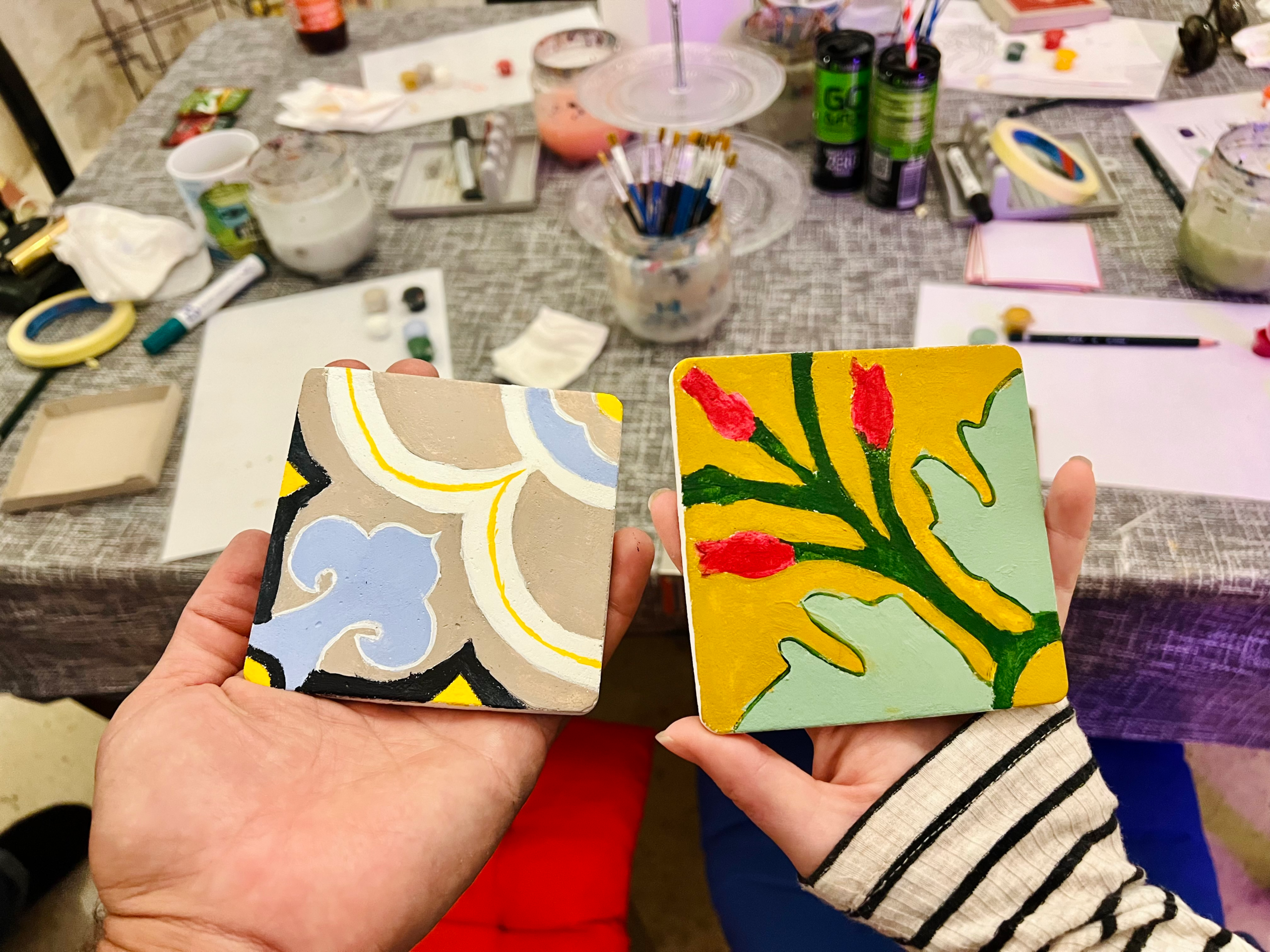
We then spent the next two hours creating our own tiles. The process started by choosing a tile pattern, tracing it onto tracing paper, then transferring it onto the actual tile. These tiles are genuine Maltese tiles, resized into coaster sized tiles by the host himself, which I found so cool!
After that, we selected our colours from a chart. Naturally, I was inspired by my grandma’s tiles and tried to recreate those same nostalgic hues.


Now, I’ll be the first to admit I’m not exactly a natural artist but I loved every minute of it. There’s something so soothing about painting; it completely quiets your mind.
When we finished, our host sprayed a protective coating over our tiles so we could take them home safely. Honestly, as a Maltese person, I loved it but if I were a tourist, I’d say it’s one of the best souvenirs you can bring back from Malta.
He also sells DIY kits and other local art-inspired souvenirs, which make great gifts.

Why You Should Try This in Malta
We were all so proud of our creations, and needless to say, we snapped plenty of pictures!
If you’re looking for something unique to do in Malta, especially during the winter months, I highly recommend this Maltese tile painting workshop. It’s perfect for locals wanting to try something new, or for tourists who’ve already explored the main sights and want a fun, creative experience instead.
Do note that this experience isn’t offered every day, so it’s best to book in advance.

Getting there is super easy:
- By Bolt or taxi: You’ll be dropped right at the door.
- By bus: It’s only about 5 minutes from Valletta. Search for Arsenal Social Football Club on Google Maps — multiple routes heading toward Gudja, Qrendi, or Birgu stop nearby. From there, it’s just a short 5-minute walk to the workshop.
I was a full-paying customer, and I’m sharing this simply because I genuinely loved the experience. That said, if you’d like to try it yourself, feel free to reach out to me at [email protected] — I can get in touch with the host and try to secure a small discount for you!
Happy Travels! x
Travel is better when shared. Come be part of my journey on Instagram @journeywithme.mt, where I swap stories, tips, and travel inspiration with fellow explorers.
Disclaimer: All content and photos in this blog post are my own unless otherwise stated. Please do not copy, reproduce, or use any images or text without written permission.
Affiliate Disclosure: This post contains affiliate links for travel services I use and love, such as experiences and hotel bookings. If you click and make a booking, I may receive a small commission which helps support this site. This does not affect the price you pay.
Thank you for supporting my work — it helps me keep sharing free travel guides and tips!