
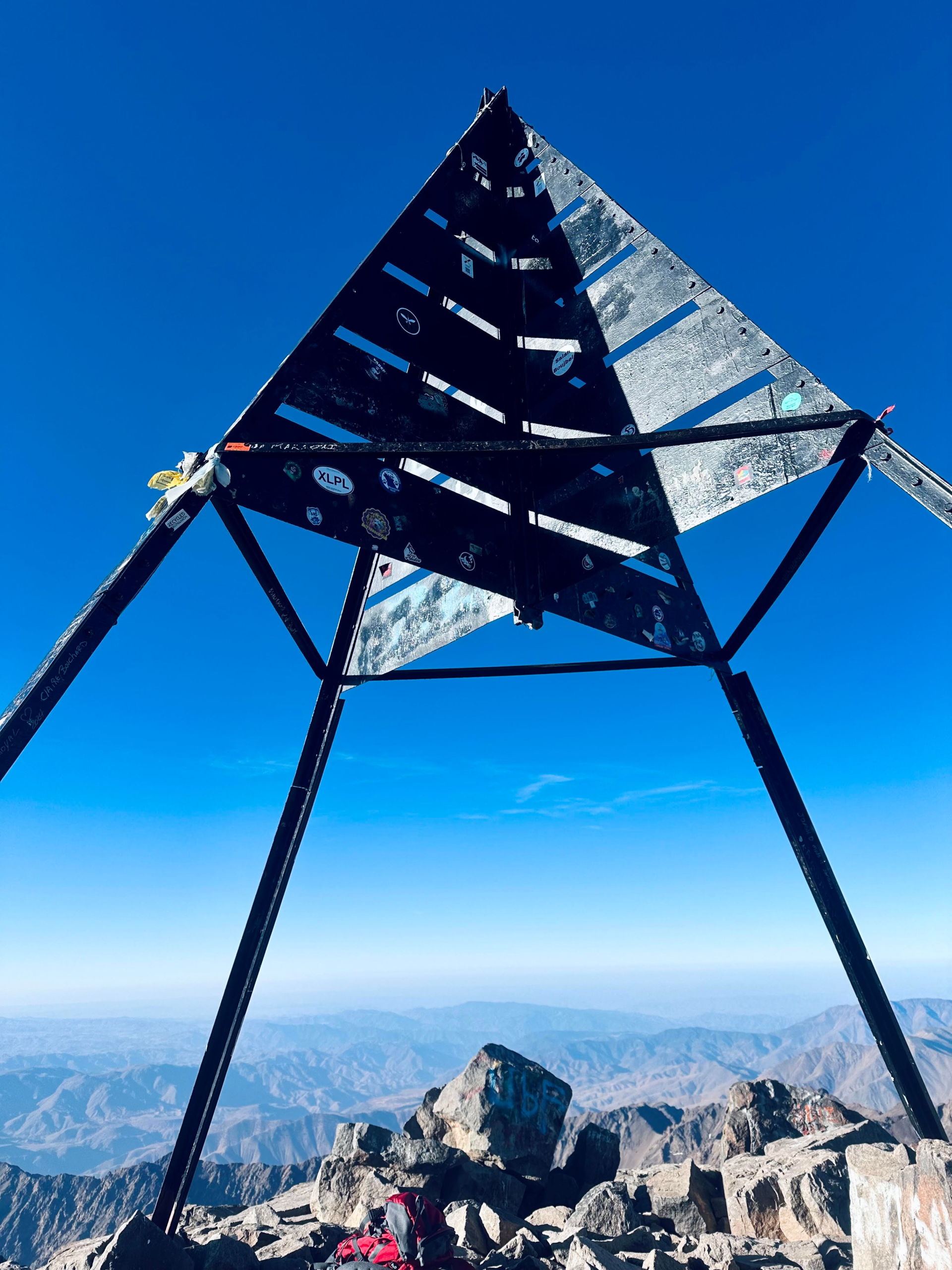
Mount Toubkal, the highest peak in North Africa at 4,167 meters, dominates Morocco’s Atlas Mountains with its rugged beauty. Climbing to the summit of Mount Toubkal is more than just a hike, it’s a journey through striking valleys, remote villages, and breathtaking alpine scenery.
In this guide, I’ll take you through my two-day trek and share the tips, gear, and insights you’ll need to make your own climb an unforgettable adventure.
Best Time to Climb Mount Toubkal
- Mid-May to Mid-October: Ideal weather, accessible trails, minimal snow.
Why You Need a Guide
Climbing Mount Toubkal requires a licensed guide. Officials check passports at the trailhead to ensure every climber has one. A guide:
- Ensures safety
- Protects the environment
- Supports local communities
I went on a two-day guided tour from Marrakech, leaving early morning and returning the next evening. Honestly, it was amazing, and I can’t speak highly enough of the tour or my guide, Yassin—patient, kind, and incredibly professional. Every part of the trip, from the driver to the chef, was well taken care of. Book the tour here.
Affiliate Disclosure: This post contains affiliate links for travel services I use and love, such as experiences and hotel bookings. If you click and make a booking, I may receive a small commission which helps support this site. This does not affect the price you pay.
Day 1: Marrakech – Imlil – Basecamp

Our adventure kicked off bright and early with an 8 a.m. pickup in a comfortable minivan from Marrakech. Right on time, like clockwork. After about 1 hour and 20 minutes, we reached Imlil; the gateway to Mount Toubkal. This is where the real journey begins.
In Imlil, we stored our main bags and packed only what we needed for the night into a small backpack. The mules carried those up to the refuge, while we kept just the essentials; phones, money, and passports (a copy is fine too).
The trek from Imlil to basecamp is often described as an “easy day,” covering around 12 km with a 1,460-meter elevation gain. It took us about 8 hours, including a couple of breaks for passport checks and a hearty lunch. While the trail is wide and non-technical, don’t be misled; it’s a steady uphill climb with barely a flat stretch in sight. You’ll need a decent level of fitness to get through it comfortably. I have to admit, I underestimated how demanding it would be. Then again, I suppose it all comes down to how you define “easy.”
Our refuge for the night was simple but cozy, with dorm-style rooms and basic amenities. There’s no electricity after dinner, so having a headlamp is a must. Dinner was delicious, with vegetarian options available, and honestly, the food throughout the trek was impressive, especially considering the remote setting. Included in the tour were one breakfast, two lunches, and one dinner, featuring a tasty mix of soups, couscous, tagines, salads, pasta, and plenty of fresh bread. No one in our group got sick, which was a huge relief (not just in Morocco, but anywhere I travel, that’s always a concern).

Day 1 Recap & Tips
- Trail: 12 km, 1,460 m elevation gain, ~8 hours with breaks.
- Pack only essentials in a small backpack; mules carry the rest.
- Refuge at basecamp: Expect simple dorm-style rooms with a cozy atmosphere. Electricity is switched off after dinner, so be sure to bring a headlamp. Toilet paper isn’t provided, so pack your ow
- Meals included: breakfast, two lunches, dinner; hearty soups, couscous, tagines, pasta, and fresh bread.

Day 2: Summit & Return

The day started with a 2:30 a.m. wake-up call, breakfast at 3, and a 3:30 a.m. departure into the pitch-black night, guided only by our headlamps. Our goal was to reach the summit in time for sunrise. The final stretch from basecamp to the summit was about 5 km with a 967-meter climb.

Although the trail isn’t considered technical, the high altitude and rocky terrain made it quite challenging. Trekking poles were essential, not only to ease the strain on my knees during the descent but also to help on the ascent. At times, I even had to use my hands for extra balance and support. Luckily, my guide stayed by my side throughout, offering encouragement and support whenever I needed it.
Reaching the summit was truly unforgettable. The 360-degree panoramic view of the Atlas Mountains glowing in the soft sunrise light was absolutely breathtaking, something no photo can truly capture. If you love hiking and mountain adventures, this experience definitely deserves a spot on your bucket list!

On the way back, some in our group opted to take mules down to Imlil (€20 in May 2025), but I chose to walk the whole way. It was exhausting, the downhill more than the uphill, especially on my toes but completing the trek on foot made the achievement even sweeter.
We got back to Imlil in the late afternoon and arrived at our riad in Marrakech by 8 p.m.
Day 2 Recap & Tips
- Basecamp to Summit: 5 km, 967 m climb, rocky terrain.
- Summit all the way down to Imlil: 12 km, 2,427 m of elevation loss.
- Wake-up: 2:30 a.m., depart 3:30 a.m. for sunrise.
- Trekking poles are essential for both ascent and descent.
- Wear layers and pack gloves, hat, and a buff—temperatures are cold even during the summer months.
- Highlight: Sunrise at the summit with 360-degree views of the Atlas Mountains—absolutely breathtaking.
- Descent: Some used mules (~€20), but walking down enhances the sense of accomplishment.
- Return: Arrived at Imlil late afternoon, back to Marrakech by 8 p.m.
Key Stats (2-Day Trek)
- Total distance: 34 km
- Elevation gain: 2,427 m
- Time on feet: ~18 hours
- Estimated calories burned: 6,256 kcal
Essential Tips for Mount Toubkal
- Check weather forecasts: Mountain conditions change fast. Mountain Forecast – Toubkal.
- Pack warm clothing: Buff, gloves, quality jacket, hiking pants; available for rent in Imlil. I would suggest to bring your own buff since you’ll use it on your face.
- Trekking poles: Lifesavers for knees on descent; available for rent in Imlil. Don’t attempt the trek without it.
- Headlamp: Needed for early summit start and nighttime trips to the bathroom.
- Footwear: Break in your hiking boots; bring good socks to prevent blisters.
- Refuge essentials: Flip-flops and toilet paper—it is not provided!
- Luggage: Store main bags in Imlil; mules transport the essential gear.
- Training: For context, I had run a marathon and was preparing for a Hyrox race but hadn’t specifically trained for the mountain. I underestimated the trek, relying mostly on weight training and casual walks. I only did about five stepper workouts before the climb. I highly recommend stepper sessions, cardio, and hiking practice to build endurance.
- Snacks & water: There are no shops between basecamp and the summit, so pack enough water and snacks or buy them at the refuge.
Why Climb Mount Toubkal?
Climbing Toubkal isn’t just about the summit; it’s about the journey:
- Connecting with local guides and fellow hikers
- Experiencing authentic Moroccan mountain hospitality
- Enjoying panoramic views
- Pushing your physical and mental limits

Climbing Mount Toubkal is one of the most rewarding experiences I’ve ever had. From the challenging climbs to the warm camaraderie, delicious meals, and breathtaking views, it’s a must-do adventure for any hiking enthusiast.
A huge thank you to my guide. From the very start, his warmth, humor, and patience made the trek feel less like a challenge and more like an adventure shared with a friend. I’d heard about the legendary mountain hospitality of the Atlas, and Yassin embodied it completely; welcoming, generous, and genuine. I can’t recommend this tour enough, the glowing reviews are absolutely deserved.
Prepare well, respect the mountain, and get ready for an adventure that will stay with you forever!
Planning a trip to Mount Toubkal usually starts and ends in Marrakech. Don’t miss my 2 days in Marrakech itinerary, which covers the best things to do in the city before or after your trek.
Be sure to also check out how I spent 9 amazing days in Morocco on a budget.
Happy Travels! x
Travel is better when shared. Come be part of my journey on Instagram @journeywithme.mt, where I swap stories, tips, and travel inspiration with fellow explorers.
Disclaimer: All content and photos in this blog post are my own unless otherwise stated. Please do not copy, reproduce, or use any images or text without written permission.
Affiliate Disclosure: This post contains affiliate links for travel services I use and love, such as experiences and hotel bookings. If you click and make a booking, I may receive a small commission which helps support this site. This does not affect the price you pay.
Thank you for supporting my work — it helps me keep sharing free travel guides and tips!