
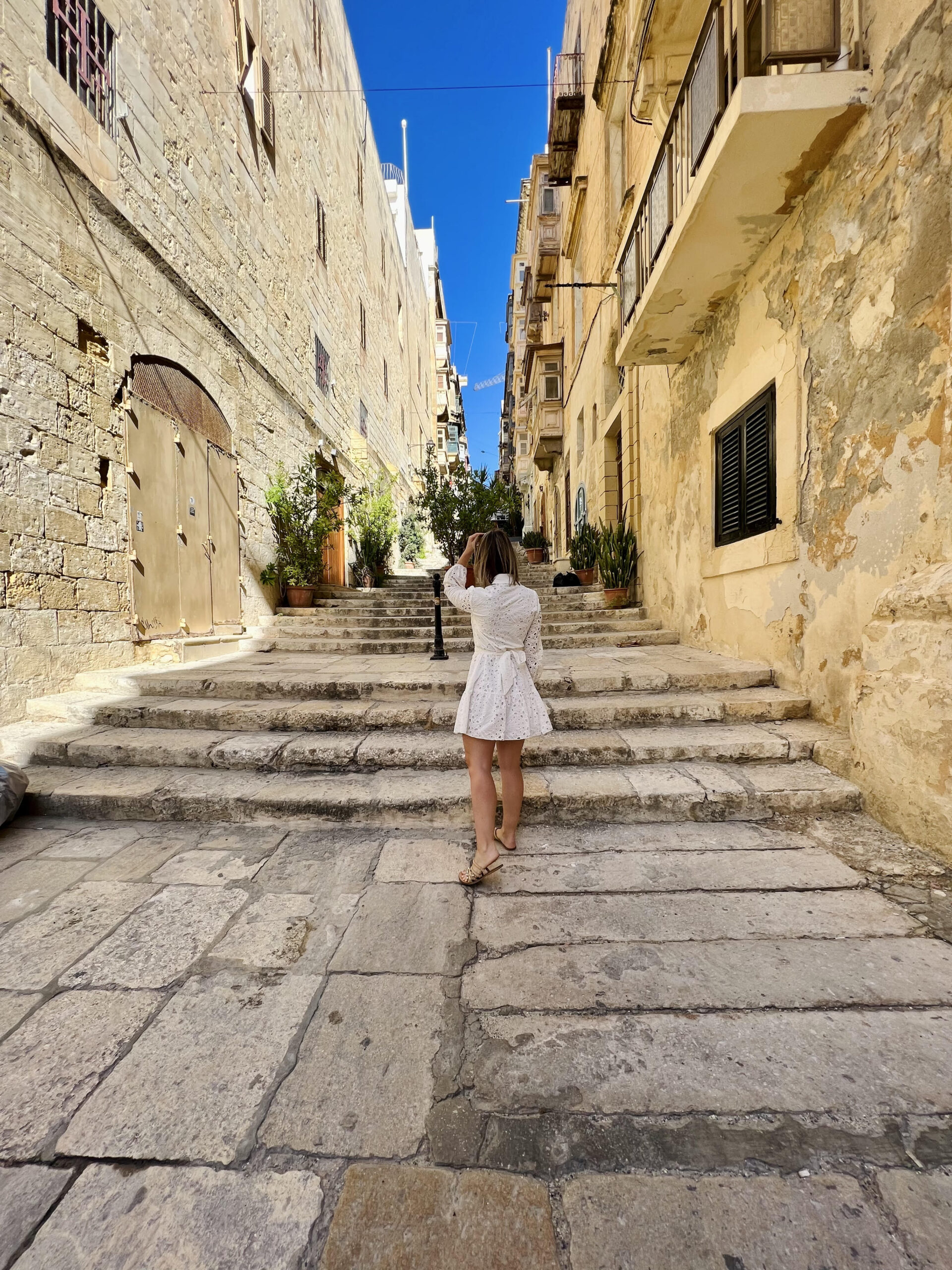
Planning a trip to Malta? Whether it’s your first visit or your tenth, there are a few things every traveler should know about the island’s culture, transport, food, and local life. From practical tips to insider advice, here are 20 things to know before visiting Malta, straight from a local’s perspective.
I’ve also shared my ultimate Malta itinerary to help you make the most of your trip.
Malta’s Size, Language & Culture
1. Malta is tiny but densely populated
The island measures just 27 km long and 14.5 km wide—yet it’s home to over 500,000 residents and millions of visitors each year, making it one of the most densely populated countries in Europe.
2. Malta’s history is layered and fascinating
Phoenicians, Romans, Arabs, Normans, the Knights of St. John, the French, and the British have all left their mark. This rich mix of influences is reflected in Malta’s architecture, food, and identity.
3. The Maltese language is unique
Maltese (yes, our very own language!) is a Semitic language with Arabic roots, blended with Italian and English. It’s spoken only in Malta and is just as eclectic as our culture.
4. English is widely spoken
Nearly everyone speaks English, but try a few Maltese words:
- Bongu = Good morning
- Grazzi = Thank you
Locals will appreciate the effort!
Practical Tips Before You Arrive
5. Malta is very safe
Violent crime is rare. Just use common sense and watch your belongings in busy tourist areas.
6. Carry some cash (€)
Cards are widely accepted, but small vendors (outdoor parkings, markets, kiosks) often prefer cash.
7. Bring the right plug
Malta uses the UK-style 3-pin plug. Pack an adapter if you’re coming from mainland Europe.
8. Expect a slower pace
Schedules aren’t always strict; things run on “island time.” Embrace it!
Getting Around Malta
9. No trains or trams
Malta relies on buses, taxis, and ferries.
10. Public transport is fine but Bolt is faster
Buses are cheap but slow and crowded. Download the Tallinja app for buses and Bolt, Uber, or eCabs for rides.
11. Short distances = long travel times
A 10 km trip can take 45 minutes with traffic. Always allow extra time.
12. Driving is on the left
Malta follows UK driving rules. Parking near beaches is tough, especially on weekends. If you want flexibility, rent a car—especially for Gozo.
Explore Beyond Valletta & Mdina
13. Malta isn’t just its capital
Go beyond Valletta and Mdina. Visit:
- Marsaxlokk – colorful fishing village
- Dingli Cliffs – breathtaking coastal views
- Ħal Saflieni Hypogeum – ancient heritage
- Gozo – nature, beaches, and a slower pace
Summer in Malta
14. The heat is intense
Malta’s summer sun is strong—bring sunscreen, a hat, and carry lots of water.
15. Beaches are crowded on weekends
Arrive early or go midweek for more space. Top beaches include Għadira and Golden Bay.
16. Blue Lagoon = beautiful but busy
Comino’s Blue Lagoon is stunning but overcrowded. Visit early, late, or book an afternoon boat tour for a calmer experience.
17. Summer means festas & fireworks
From June to September, village festas bring colourful fireworks, processions, and band marches—a unique Maltese tradition.
Food & People
18. Maltese food is incredible
Try:
- Fenek – rabbit stew
- Pastizzi – ricotta or pea pastries
- Ħobż biż-żejt – bread with tomato, tuna, capers & olives
Plus, Malta offers excellent Italian food and international options (sushi, Filipino, Korean).
19. Connect with locals
Maltese people are warm, welcoming, and always happy to share tips.
20. Malta is diverse
Despite its size, Malta is home to people from many different cultures and backgrounds.
Malta may be small, but it’s packed with history, culture, and charm. Whether you’re here for beaches, food, or exploring beyond the tourist hotspots, these tips will help you make the most of your trip.
Happy Travels! x
Travel is better when shared. Come be part of my journey on Instagram @journeywithme.mt, where I swap stories, tips, and travel inspiration with fellow explorers.
Disclaimer: All content and photos in this blog post are my own unless otherwise stated. Please do not copy, reproduce, or use any images or text without written permission.